Welcome to
the Blog
Replete Wellness
RW

Post-Partum Blood Building Smoothie
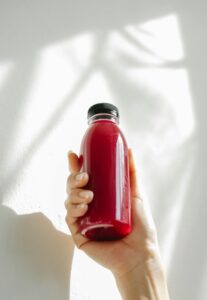
Iron deficiency is the most prevalent nutritional deficiency of pregnancy affecting around 40% of women. It is also a common cause of fatigue, brain fog, hair loss and insomnia, all of which are already common symptoms of pregnancy and postpartum. Unfortunately we tend to normalize symptoms as ‘oh that’s just pregnancy’, yet an iron deficiency could be making an already physically difficult experience even more uncomfortable. We’ve been tracking for almost 5 years now and have alarmingly found that most of our female patients have sub-optimal iron levels in the 3rd trimester and the 3 – 6 month window after giving birth, impacting health of both mom and baby.
Postpartum Mood Tip: if you were anemic during or before your pregnancy you’re likely seriously deficient now (even non-emergent births result in significant blood loss) & anemic women are 66% more likely to experience post partum depression than iron-replete women
Iron Testing Strategies:
Throughout pregnancy we routinely check ferritin and hemoglobin at least once a trimester (plus thyroid, vitamin D, B12, blood sugar & some key pregnancy hormones – more to come in a future post). However, in the first 6-weeks postpartum your health care provider should be focusing on a CBC blood test in order to test your hemoglobin levels. While ferritin (a protein marker of iron storage) is your most important marker of overall iron status it can be falsely elevated in the postpartum window due to the stress and trauma of birth so it’s best to start with a CBC. Hemoglobin should be > 120g/L for optimal healing, mood & hair loss prevention after giving birth.
After 6 weeks post partum it’s appropriate to add a ferritin test to more accurately determine iron status. Unfortunately, the current reference range for ferritin is wildly inappropriate. If you fall anywhere in the reference range of 5 – 275 units you’re considered ‘okay’. I’ve seen hundreds of ladies with a ferritin level of 5 – 10 who we’re told by their medical doctors that their iron levels were just fine; an assessment that blatantly ignores the evidence which tells us that a ferritin of >70 is ideal for hair growth, while levels <100 are associated with fatigue in women. This under-diagnosis of iron deficiency is a problem due to the simple fact that ferritin stores iron, and iron carries oxygen. This oxygenation of tissues is necessary in order for you to have adequate circulation and optimal cellular function. It’s also critical to your overall energy levels. Considering how important iron is for your circulatory system you can see why women with low ferritin levels are all exhausted and half bald postpartum, on top of taking care of a new born they’re doing it all with poor oxygen circulation!
Iron Supplements:
Conventional methods for treating iron deficiency anemia involve supplementation with a form of elemental iron known as ferrous sulfate. This form of iron commonly causes gastro-intestinal upset, meaning it’s difficult for your body to break down and absorb. Heme iron & bisglycinate forms, which are rarely prescribed, has higher bioavailability than non-heme iron sources like ferrous sulfate. While we exclusively prescribe these types of irons (ideally alternating to improve absorption) to replete patients it’s also important to focus on food sources of iron and iron absorbing co-factors like magnesium and vitamin C. Once iron levels come back to ideal range most women find that they’re just fine using food therapies like this iron-boosting super smoothie to maintain great iron stores.
Our Favourite Smoothie boosters for Anemia;
- We always include citrus in our smoothies; vitamin-C-rich foods such as oranges and lemons enhance iron absorption.
- Protein is a must. Not only is it important for blood sugar regulation in pregnancy and post partum, it also helps your body make hemoglobin; the protein which facilitates the transport of oxygen in red blood cells.
- Fermented foods, while not necessarily a great addition to a smoothie (think sauerkraut & pickles), have beeb shown to enhance dietary iron absorption. Consider serving this smoothie along an omelette featuring kimchi or fermented olives.
- Avoid conventional milks in your blood building smoothies since high levels of calcium can inhibit iron absorption.
- Spinach is an anemic mama’s best friend; a cup of cooked spinach contains 4g of easy to absorb iron.

Blood Building Postpartum Smoothie
Ingredients
- 1 cup organic soy milk
- 1 cup spinach
- 1 beet steamed
- 1 cup ice
- 1 cup berries, your choice
- 1 scoop protein powder (we prefer beef isolate, vanilla)
- 1 orange juiced
Instructions
- Place everything in the blender and blend until smooth.
References:




Wow wonderful blog layout How long have you been blogging for you make blogging look easy The overall look of your site is great as well as the content